Our History

History of the St. Joseph Island Pioneer Museum

Founded in 1963 by the St. Joseph Island Historical Society, the St. Joseph Island Museum is dedicated to preserving and sharing the rich heritage of St. Joseph Island. Today, the Museum cares for a collection of more than 7000 artifacts representing over 200 years of Island history.
The story of St. Joseph Island is told through four distinct periods: Indigenous occupation and the era of Fort St. Joseph (1798-1814), pioneer settlement (1835-1890), the transition to predominately private ownership by 1890, and the Depression and wartime years (1900-1945).
The Museum began with a single building-the historic church. In 1964, following the closure of the Island’s one-room schools and the consolidation of students to Richards Landing and Hilton Beach schools, the I Line School located across the street from the Church became the second building in the growing Museum.
Community spirit has always been at the heart of the Museum’s development. The Log House was relocated to the site through the dedication of Ralph Nelson Sr., who generously donated his time, expertise and financial support to the project. The Barn was moved from the south end of the Island to the Museum site in 1967 as a Centennial project led by Jocelyn Township council. Twenty volunteers worked together to carefully dismantle the structure and reconstruct it on the Museum grounds.
During the 1970s, the Church underwent significant stabilization work thanks to the donated labour of Jim Harten and Ralph Nelson. Electricity was introduced to several buildings, ad then-curator Ada. Tranter enhanced the Museum’s professional standards through Ministry sponsored training in filing, genealogy, and artifact conservation.
The 1980s marked another period of growth. A massive white pine log, representing Ontario’s last stands of virgin timber, was installed and preserved on the grounds. The Island’s first school, dating to approximately 1887, was relocated from Sailors encampment. In 1988, the 1912 Kentvale General Store was donated by Cal Kent, it was moved to the Museum site as part of the store’s 100th anniversary celebrations.
Over the next few decades, the Museum continued to grow through the generosity if Island residents who have entrusted their treasured artifacts to its care. Today, the collection includes more than 7000 artifacts, each with a meaningful connection to St. Jsoeph Island’s history.
Visitors can explore a remarkable variety. Of artifacts, including relics from Fort St. Joseph, a horse-drawn hearse, military memorabilia, stoneware, farm implements, a telephone operator’s switchboard, tractors, blacksmithing equipment and even an intricately crafted wreath made of human hair. Together these objects tell the stories of the people, communities, and traditions that have shaped St. Joseph Island.
We invite visitors to take a stroll through time, discover the Island’s unique heritage, and experience the stories preserved.

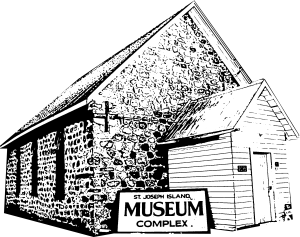
Church

The Church

When the St. Joseph Island Museum opened in 1963, it consisted of just one building: the I Line United Church. Formerly known as the Zion Church, this historical building was erected in 1899 and donated to the Museum Board in 1963.
Log Schoolhouse

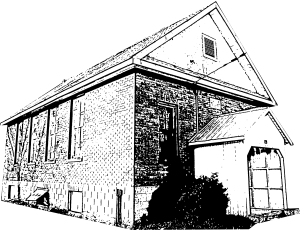
The Brick School

The I Line school, erected in 1933 and located across the road from the I Line United Church, was used until 1964 when all the one-room schoolhouses were closed and the children were bussed into Hilton Beach and Richards Landing. The school was then donated to the Museum Board, allowing our museum to expand.
Barn

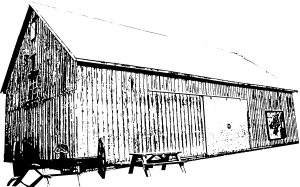
The Barn

The barn, originally located at the foot of the Island, was dismantled and re-located as a Centennial Project in 1967. It was re-built at the Museum in an old fashioned barn-raising bee involving some 20 men. The Jim Reed Drive Shed was added in 1999, named in honour of long-time museum volunteer and benefactor, Jim Reed.
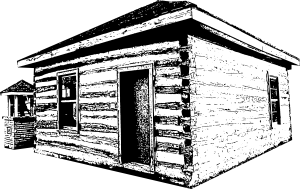
Log School

The Log Schoolhouse

The Island’s first school, circa 1887, was moved to the Museum Village from Sailor’s Encampment in the 1980s. It was used as a school, council chambers, Sunday school, and as a private residence.
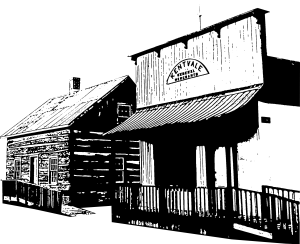
Log Cabin and Old Kentvale Store

The Log Cabin

The log cabin is typical of early pioneer dwellings found on the Island in the 1890s. To lay claim to a property, settlers had to clear 15 acres and erect a dwelling. This cabin is actually a blending of two historical log cabins, because of base logs that had rotted and were no longer salvageable.

The Kentvale Store

Kentvale Merchants has been a St. Joseph Island institution for most of its modern history. Since 1888, generations of the Kent family have been providing old fashioned service to the area. This store served the Island community from 1912 to 1932, when the current store was built. In 1988, on Kentvale’s centennial, the 1912 Kentvale General Store was donated by Cal Kent and relocated to the St Joseph Island Museum.

Our Story

Free Grants and Homestead Act of 1868

Located in the St. Mary’s River downstream from Sault Ste. Marie, Ontario, St. Joseph Island is a land rich in history dating back to the fur trading days of the 1700s.

The Island is 99During the nineteenth century, both the Ontario and federal governments promoted settlement in Northern and central Ontario through a series of free land policies designed to encouraged agriculture and open frontier forests for development. One of the most significant initiatives was the Free Grants and Homestead Act of 1868, which offered settlers 100 acres of free land as an incentive to establish farms in newly opened areas. To obtain legal title to their land, homesteaders were required to meet several conditions:

  • Applicants must be at least 18 years of age
  • They must clear and cultivate a minimum of 15 acres
  • They must build a dwelling measuring 16 feet by 20 feet
  • They must reside on the property for at least six months each year over a five-year period

By the mid-1800s, much of the prime agricultural land in southern Ontario had already been settled, while vast tracts of land remained available in the north. Drawn by the promise of free land and ne opportunities, settlers ventured into heavily forested regions, carving farms, homes and communities from the wilderness. Their determination and hard work helped shape the rural landscape of Northern Ontario and lais the foundations from many communities that exist today.

Visit the St. Joseph Island Pioneer Museum

2394 I Line Road
Richards Landing, Ontario, Canada

Curator: Carrie Uusitalo
(705) 246-2672
info@stjoemuseum.com

Open Seasonally, June through September
Wednesday – Sunday: 10am – 5pm. Last Admission at 4pm.
Closed Mondays & Tuesdays.

For news and updates, follow us on Facebook.

Scroll to Top